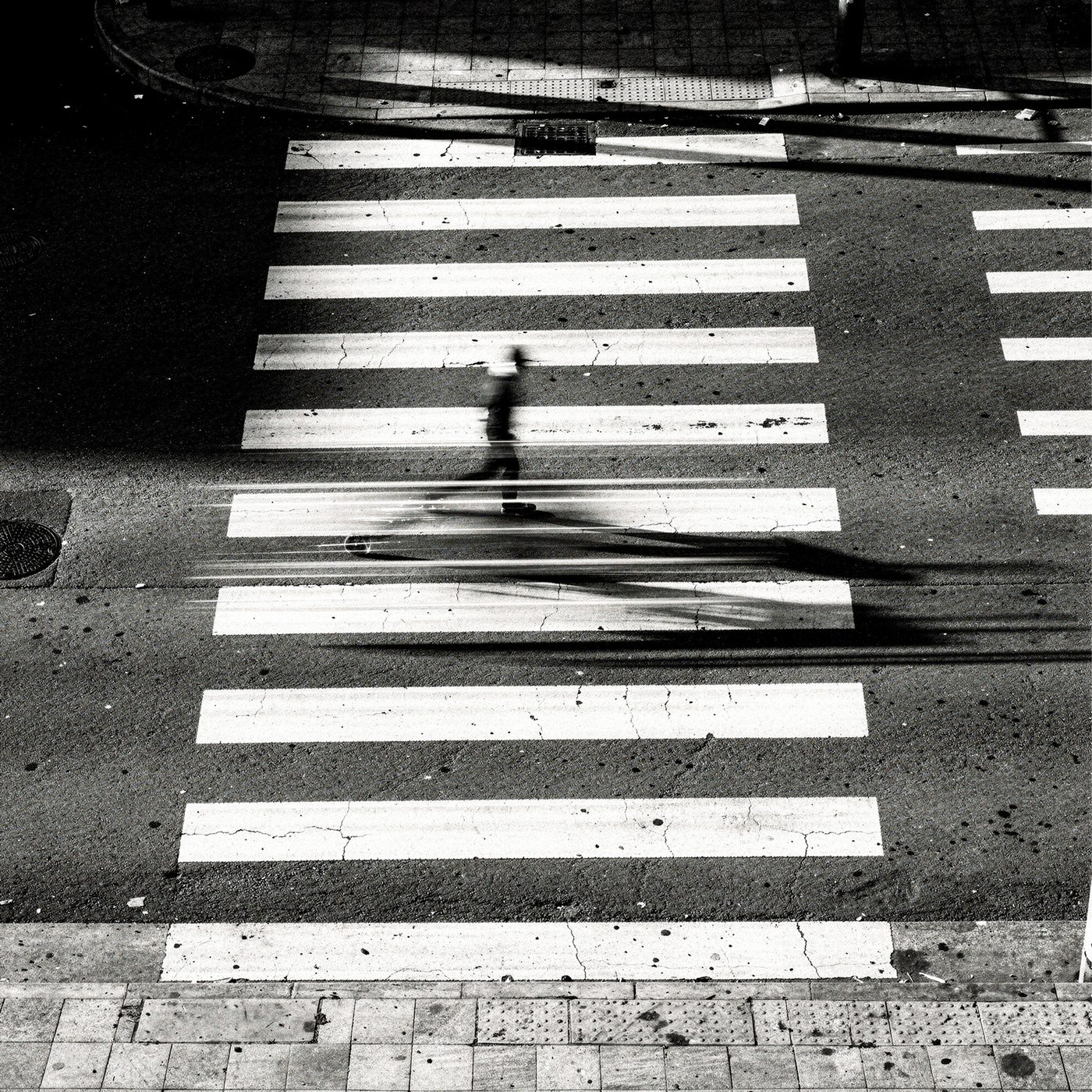
What moves,
leads
Before Saul Bass, opening titles were a list of names projected while the house lights were still on. Then came his sequences for Hitchcock and Preminger, the torn paper of Anatomy of a Murder, the spirals of Vertigo, and the first minutes of a film became storytelling.
Bass had understood something that is worth gold today, movement does not decorate, it guides. It tells the eye where to go, when to stop, what to wait for. A still image is looked at, a moving image is followed, and following is already a form of granted attention.
In the infinite flow of screens this law decides everything, the thumb scrolls and stops only where something moves with intention, not where it merely fidgets. Because there is movement and movement, the designed kind builds a tempo, a rhythm, a small three-second dramaturgy, the gratuitous kind is just animated noise, and the eye discards it the way it discards a banner.
Motion design is not an effect to add at the end, it is a form of writing, with its pauses and its accents. I wonder how much of our daily scrolling would stop in front of three seconds designed the way Bass designed them.